Abossey Okai dealers reject spare parts claims behind proposed 30% transport fare hike
Written by; Regina Bless
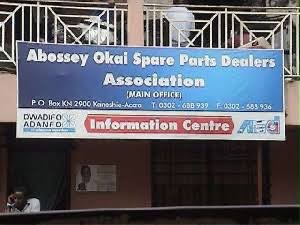
The Abossey Okai Spare Parts Dealers Association has rejected claims that rising spare parts prices are responsible for the proposed 30 per cent increase in transport fares by commercial transport operators.
The Association described claims by the Ghana Road Transport Coordinating Council (GRTCC) and the Ghana Private Road Transport Union (GPRTU) as false and misleading, insisting that there has been no significant increase in the prices of spare parts to warrant their use as a justification for higher transport fares.
According to the dealers, prices of key vehicle components, including engine oil and filters, have remained relatively stable, while stock levels at the Abossey Okai spare parts market have also remained steady.
The Association further stated that there had been no significant changes in import duties or prevailing market conditions that could account for a substantial increase in vehicle maintenance costs.
The dealers questioned why Abossey Okai was being cited as a major source of increased maintenance costs when some commercial transport operators had reportedly indicated that they purchase spare parts online rather than directly from dealers at the market.
They accused some transport operators of using the proposed fare increase to put pressure on government while placing an additional financial burden on ordinary Ghanaians. The Association went as far as describing the operators as “road robbers.”
The development comes after the GPRTU and other transport stakeholders proposed a 30 per cent adjustment in transport fares, citing rising operational costs.
The transport union has pointed to several factors, including fuel, spare parts, lubricants, insurance and other expenses associated with operating commercial vehicles.
The GPRTU has also maintained that the proposed adjustment is necessary despite the government’s intervention to absorb GH¢2 per litre of the increase in diesel prices.
However, the proposed fare adjustment is yet to become final, as discussions and negotiations among relevant stakeholders are expected to determine the appropriate rate.
The Abossey Okai Spare Parts Dealers Association is therefore calling for greater transparency in the process. It wants government regulators, transport unions and other stakeholders to rely on independently verifiable economic data before approving any fare increase.
The Association argues that transport fares should reflect genuine changes in operating costs rather than claims that cannot be supported by evidence.
The controversy highlights the need for a transparent assessment of the actual cost of running commercial vehicles in Ghana.
While transport operators have a legitimate interest in recovering rising operational expenses, passengers also deserve protection from unjustified increases.
Ultimately, the debate should move beyond accusations and counter-accusations. An independent review of fuel, maintenance, insurance, spare parts and other operating costs could provide a clearer basis for determining whether a 30 per cent increase is justified.
For commuters already struggling with the cost of living, the outcome of these discussions will be closely watched. The central question remains whether the proposed fare increase reflects genuine increases in operating costs or places an unnecessary financial burden on passengers.