Domelevo urges Chief Justice to refrain from political comments
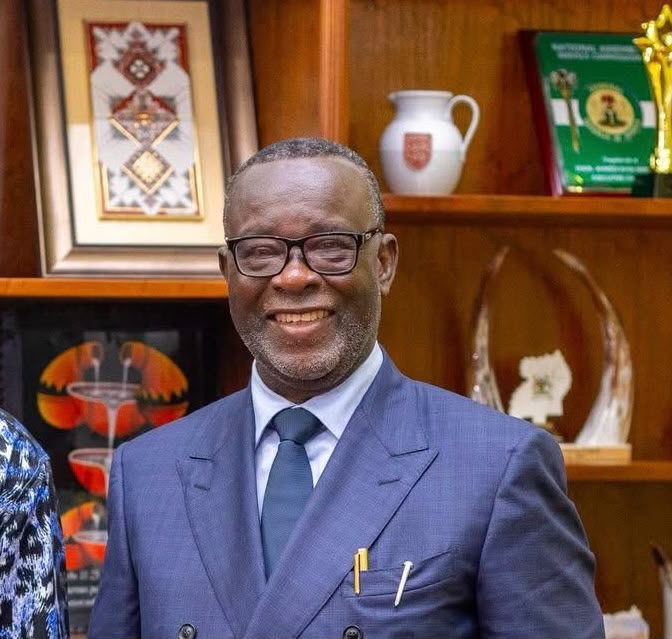
Written by; Regina Bless
Former Auditor-General Daniel Yaw Domelevo has urged Chief Justice Paul Baffoe-Bonnie to exercise restraint when commenting on political matters, particularly issues that could potentially end up before the courts.
Mr Domelevo warned that public comments by the head of the Judiciary on politically sensitive issues could create a perception of bias and undermine public confidence in the neutrality and independence of the courts.
Speaking on Channel One TV on Saturday, September 5, Mr Domelevo acknowledged that the Chief Justice may have intended his recent engagements with state institutions to encourage improved performance and cooperation. However, he cautioned that some of the comments made during those engagements could raise questions about judicial impartiality.
“My wish is that if it is possible, the Chief Justice should stop commenting on some political issues, especially issues that can later on cover litigation coming back to the court,” he said.
Mr Domelevo explained that comments about the performance or conduct of public institutions could become problematic if those institutions later become parties to legal proceedings.
He argued that if the Chief Justice publicly labels an institution as corrupt, inefficient or poorly managed, it could create the impression that he has already formed an opinion before a related case reaches the courts.
The former Auditor-General’s comments follow remarks made by Chief Justice Baffoe-Bonnie during visits to the Social Security and National Insurance Trust (SSNIT) and the Minerals Income Investment Fund (MIIF) on September 2.
During his visit to MIIF, the Chief Justice praised what he described as improvements in the performance of the institution and other state entities under the current administration.
He questioned what Ghana had been doing over the previous eight years in light of the improvements he said he had observed.
The Chief Justice also made comments at SSNIT comparing the institution’s current performance with its previous consideration of disposing of some of its assets, including the Labadi Pleasure Beach.
His remarks have generated debate over whether the head of Ghana’s Judiciary should publicly comment on the performance of institutions and issues that have political implications.
The Ghana Centre for Democratic Development (CDD-Ghana) has also called on the Chief Justice to exercise greater restraint and discretion in his public engagements, arguing that such caution is necessary to protect the credibility and perceived impartiality of the Judiciary.
The New Patriotic Party has similarly criticised the comments, describing them as partisan and arguing that the Chief Justice must maintain political neutrality, especially at a time when politically sensitive cases may come before the courts.
Mr Domelevo’s intervention has therefore added to a broader national conversation about the appropriate boundaries of public commentary by holders of sensitive constitutional offices.
While the Chief Justice, like every citizen, may contribute to national discussions, the controversy highlights the importance of carefully distinguishing between public accountability and political commentary.
For the Judiciary, public confidence is crucial. Even where no actual bias exists, statements that create an appearance of political alignment could affect how citizens perceive the independence of the courts.
The debate, therefore, is not necessarily about whether the Chief Justice should remain silent on national affairs, but whether his public statements should be carefully framed to avoid prejudging matters that could eventually require judicial determination.
Ultimately, the credibility of the Judiciary depends not only on impartial decisions but also on the public perception that those decisions are made independently and without political influence.