Education Ministry says Arabic will not be compulsory in Ghanaian schools
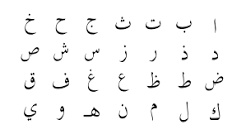
The Ministry of Education has clarified that the introduction of a standardised Arabic language curriculum does not mean Arabic will become compulsory in Ghanaian schools.
The ministry said the curriculum was developed specifically to regulate the teaching of Arabic in English and Arabic schools, particularly those serving Muslim communities, and is not intended for all public schools.
Education Ministry spokesperson Hashmin Mohammed said the initiative followed a request from the Islamic Education Unit of the Ghana Education Service for a standardised curriculum for Arabic instruction.Breaking news alerts
He explained that Arabic has been taught in English and Arabic schools in Ghana since the late 1980s, but there had not been a uniform curriculum to guide instructors.
“When that request was made to them, they saw it as legitimate to develop or formulate a standardised curriculum that can guide the Arabic instructors whenever they are teaching Arabic in English and Arabic schools,” he said.
According to Hashmin Mohammed, the National Council for Curriculum and Assessment (NaCCA), which is responsible for curriculum development, subsequently engaged the Islamic Education Unit and other stakeholders to develop the curriculum.
He rejected suggestions that the initiative was intended to promote Islam in Ghana’s public education system.
“We still have some section of our compatriots who are ignorant about certain things, and there is a need for us to clarify that Arabic is not a religion. It is a language just like French, English, or Spanish and any other international language,” he said.
He stressed that Arabic would remain an optional language for students who choose to study it.
“This language policy is not compulsory. It is just an optional language for people who will show interest in studying it,” he added.
Mr Mohammed said English and Arabic schools have existed in Ghana for decades, particularly in parts of northern Ghana and Zongo communities.
He said the state formally recognised such schools in the 1980s, leading to the establishment of the Islamic Education Unit within the Ghana Education Service.
The ministry spokesperson further clarified that the standardised curriculum would apply to the teaching of Arabic within those schools and would not require all Ghanaian schools to introduce Arabic.
Mr Mohammed also dismissed concerns raised on social media about why Arabic was being standardised while other international languages such as French and Chinese were not being treated similarly.
He said the curriculum development process was prompted by a specific request from the Islamic Education Unit and the existing educational structure serving English and Arabic schools.
“Once they are a community and they are a unit under the Ghana Education Service, if they make a request that they want to complete whatever teaching methodology they are using to teach their community, NaCCA as a regulatory body will have interest in that,” he said.