Ghanaians Deserve Answers on AKSA ‘Secret Deals’ and Public Funds
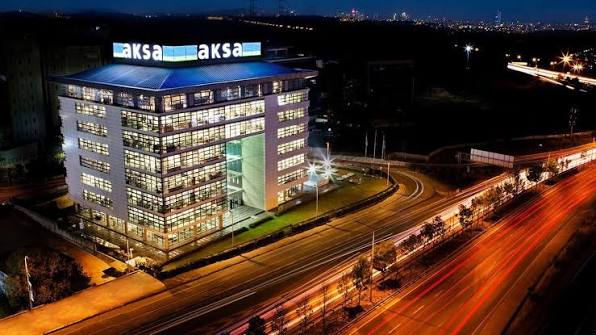
For several years, one major deal has sparked public concern in Ghana. In August 2015, the government, through the Electricity Company of Ghana (ECG), signed a 5-year Power Purchase Agreement (PPA) with AKSA Energy, a Turkish generation company, for a 370MW plant. The deal aimed to address electricity shortages and improve power supply across the country.
Although targeted to become operational in the first half of 2016, records show that the Tema plant was commissioned in April 2017 after a 9.5-month construction period. Dr. Matthew Opoku Prempeh, then Minister of Energy, subsequently announced these developments during Ministry of Information press briefings.
In October 2022, AKSA and ECG signed a new 15-year, US dollar-based energy sales agreement for the Tema plant. The parties executed these revised arrangements under a new PPA framework that replaced the previous “Take or Pay” model in March 2025. Around this time, AKSA completed a dual-fuel conversion to enable switching between Heavy Fuel Oil (HFO) and natural gas, allowing the company to exploit fuel price arbitrage and meet national emissions targets.
As of June 2026, AKSA operates 370MW in Tema and 123MW in Anwomaso, while the Kumasi plant finalizes commissioning. The company reported a $22.45 million annual import turnover for 2025–2026 and continues transitioning to natural gas.
Despite these milestones, persistent uncertainty mars the ongoing process. Public concerns focus on project costs, value for money, and whether the government complied with parliamentary approval procedures under Article 181 subsection 5 of the 1992 Constitution.
A lack of due diligence forces citizens to pay twice for their civic commitment. First through taxes, and then through poor public services. Whether in energy, infrastructure, or procurement, the core principle remains that public funds belong to the public, and taxpayers retain the fundamental right to audit them. Today, Ghanaians demand comprehensive investigations into opaque transactions that lock the state into crippling, long-term financial commitments.
International enforcement actions have heightened these domestic concerns. In 2024, United States authorities announced enforcement measures against former Goldman Sachs investment banker Asante Berko for Foreign Corrupt Practices Act (FCPA) violations connected to a separate Ghanaian power project. In August 2026, a federal jury in Brooklyn, New York, convicted Berko of conspiracy to violate the FCPA, substantive FCPA violations, and money laundering conspiracy following a nine-day trial before US District Judge Diane Gujarati. Berko was remanded into custody and faces up to 30 years in prison. The US Department of Justice established that Berko facilitated over $1 million in bribes to Ghanaian public officials to secure a lucrative power contract for a client.
These court proceedings confirm a crucial lesson of opaque procurement breeding both poor economic value and criminal misconduct. When state contracts remain concealed, citizens forfeit not only financial resources, but institutional trust, development opportunities, and democratic accountability. A free society requires full visibility into how governments spend public revenue and execute agreements.
To safeguard the public purse, the state must establish strict transparency measures. The government must publish all major contracts and subsequent amendments within 30 days, disclosing pricing structures, tenure lengths, and baseline commercial terms. Also, the authorities must place the complete AKSA PPAs, contract amendments, and capacity charge formulas online for open public examination.
Parliament’s Public Accounts Committee and the Auditor-General should also conduct a comprehensive forensic audit of all disbursements under the AKSA agreements and similar power deals, comparing actual power delivered against capacity charges paid. Wherever institutions uncover unlawful acts, citizens expect decisive domestic prosecution, international judicial cooperation, and full asset recovery.
The ongoing AKSA controversy and the US conviction of Asante Berko signals that secrecy serves only those who illicitly profit from it. Ghanaians demand to know what the state signed, who profited, and what tangible benefits the nation secured in return. _____
This article was produced as part of the Liberalist Centre’s Journalism for Liberty Fellowship, with funding from Liberty International.