Innovation at Scale: Transforming Ghana’s Digital Ecosystem
The second day of National ICT Week, themed “Innovation at Scale: Creating Opportunities Across Ghana’s Digital Ecosystem,” brought together key institutions such as DVLA, Ministry of Foreign Affairs, Ghana National Fire Service and technology-sector stakeholders to demonstrate how digital transformation is reshaping public services, strengthening national infrastructure and creating more efficient systems for citizens and businesses.
The discussions highlighted a common message: technology delivers lasting value when institutions, processes and citizens move together.
Building Ghana’s Digital Infrastructure
SmartInfranco, under its connectivity and infrastructure mandate, highlighted the importance of delivering reliable digital infrastructure to organisations across Ghana. A major focus was the Ghana Data Centre, which provides an environment designed to support secure, reliable and scalable digital operations.
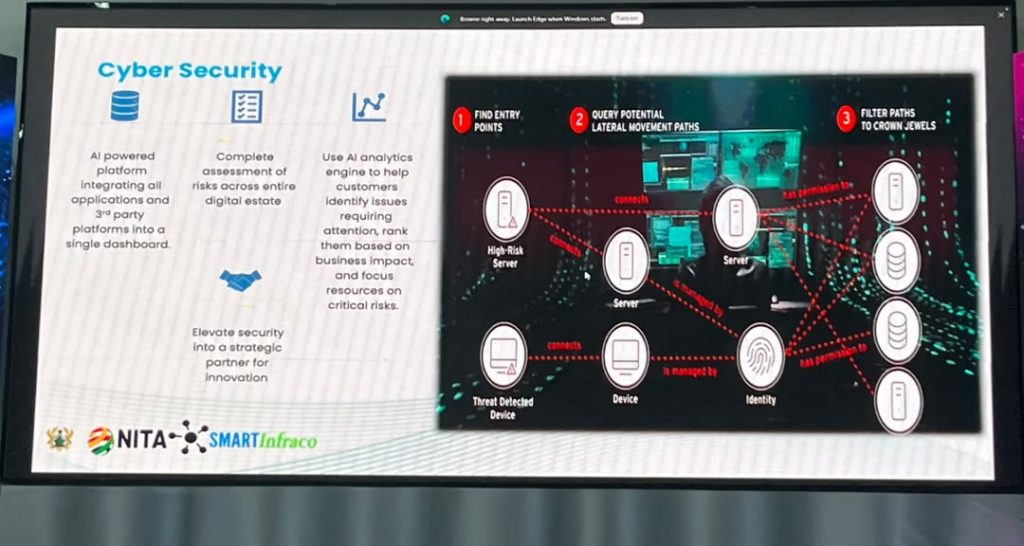
The key features highlighted include:
- High availability
- Pre-migration assessment
- One-stop-shop services
- Plug-and-play infrastructure
- Dedicated white-space facilities
The data centre also offers important national value propositions, including advanced security, precision cooling, power redundancy and data sovereignty.
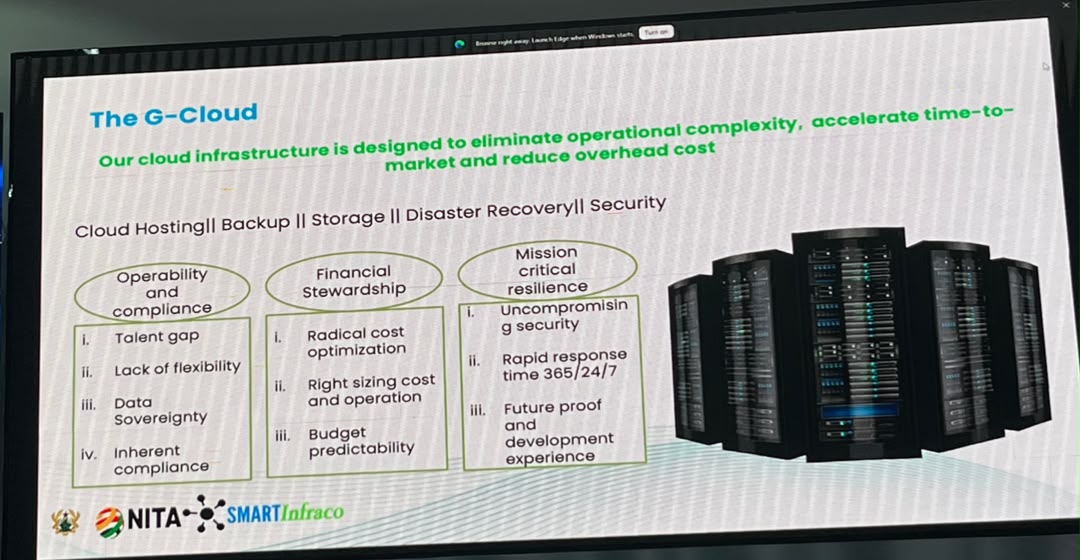
Another major initiative is the G-Cloud, a cloud infrastructure designed to eliminate operational complexity, accelerate time to market and reduce overhead costs. Its focus includes operational efficiency, compliance and responsible financial stewardship.
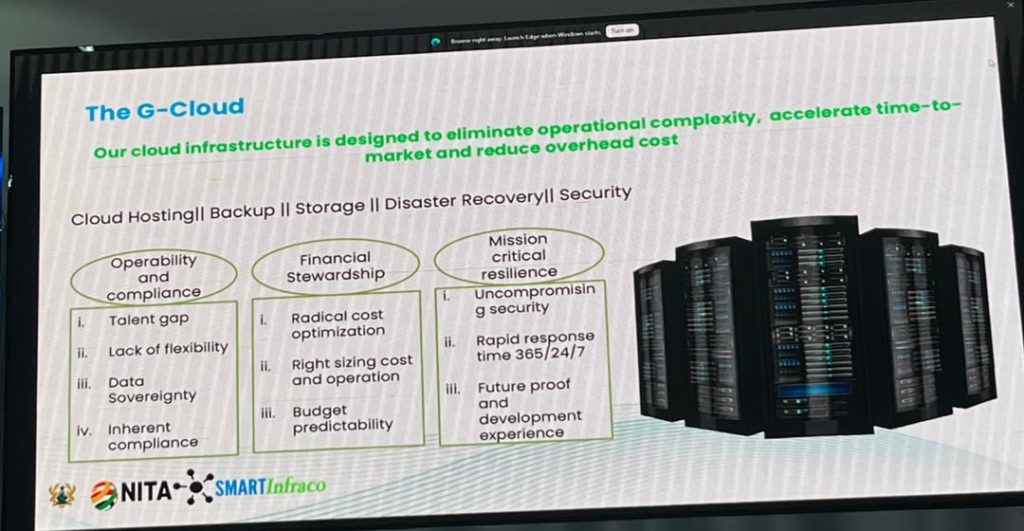
These developments demonstrate the growing need for Ghana to maintain secure digital infrastructure that can support government agencies, businesses and other organisations while keeping critical data within the country.
Ministry of Foreign Affairs highlighted their digital transformation
Digital Passport: Making Public Services More Efficient
The Digital Passport initiative also featured prominently, demonstrating how technology is changing the passport application and production process.
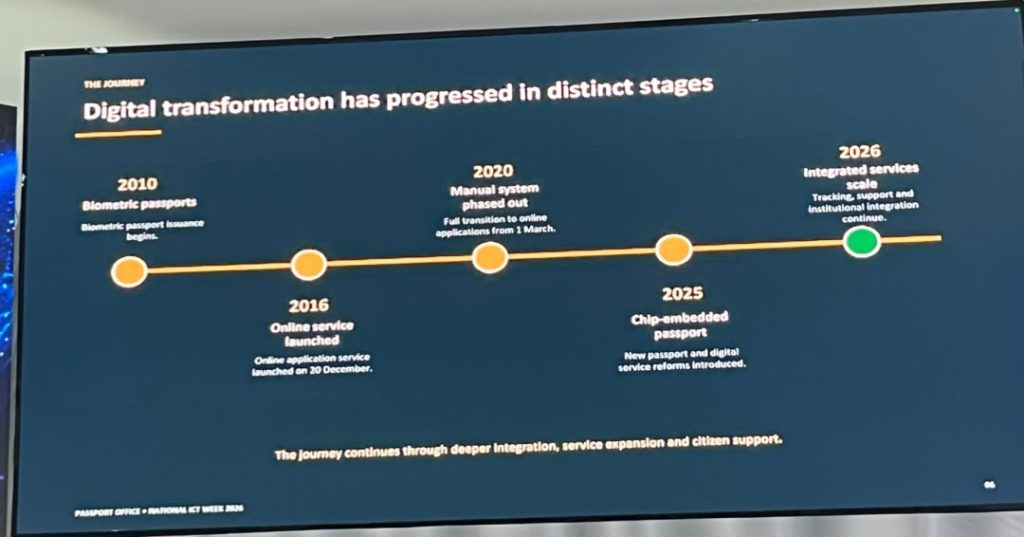
Ghana’s passport service has progressed through distinct stages of digital transformation. Applicants now experience a more predictable journey, while modern printing technology has enabled centralised passport production. Chip-embedded passports are coded and verified, providing enhanced security features for international travel.
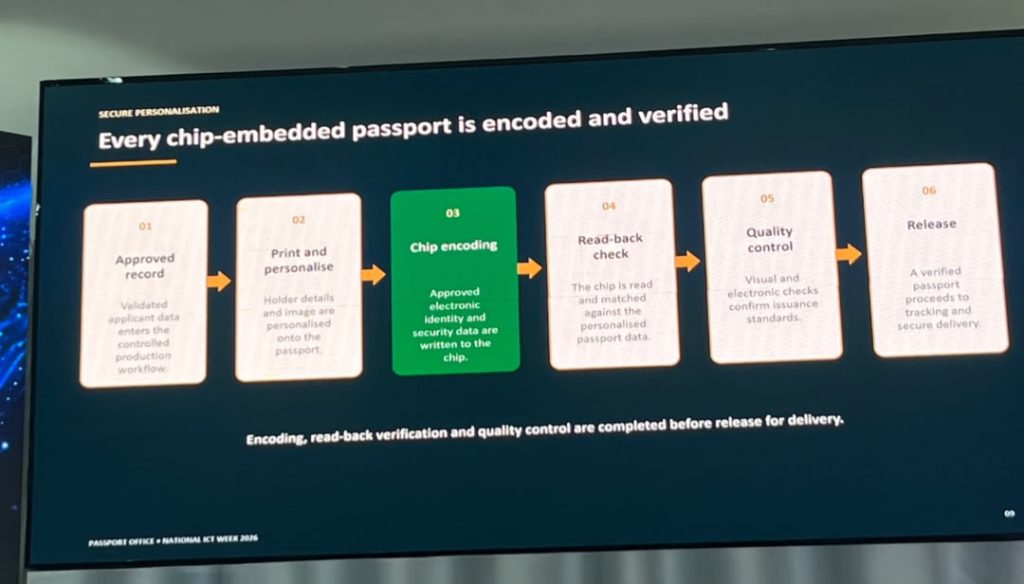
The digital passport ecosystem now covers several stages of the process, including:
- Online application and appointment scheduling
- Digital payments
- Biometric identity verification
- Chip-embedded passports
- Centralised passport production
The service is also being supported through strategic collaboration with institutions and partners including Ghana.gov, the National Information Technology Agency (NITA), the National Signals Bureau and biometric travel technology providers.
The figures presented demonstrated the scale of the transformation, with 285,726 applications received, a 92.8% call-answer rate, 280,790 passports printed, 13,161 applications processed at new Passport Application Centres (PACs), and seven new PACs established.
The next phase of the transformation will require deeper collaboration across government, particularly around secure data sharing, common verification standards and integrated digital services.
The objective is clear: design services around the citizen’s journey rather than only around internal institutional processes.
Digital payments are also being expanded through options including mobile money, bank payments and other digital identification and payment channels, making government services more accessible.
Ghana National Fire Service Goes Digital
The Ghana National Fire Service (GNFS) is also embracing digital transformation to improve the delivery and verification of fire certification services.
Fire certification is an important requirement for ensuring that buildings and facilities meet safety standards. However, one of the challenges identified has been the forgery of fire certificates, with some individuals attempting to bypass established procedures.
In response, the GNFS is developing an automated digital fire certificate system that will make the process more efficient while making certificates easier to verify.
The Service issued about 25,000 fire certificates in the previous year, highlighting the scale of demand for the service.
The digital transformation agenda will also involve taking fire-safety education and certification closer to communities, including churches, schools, homes and mosques, while encouraging property owners and institutions to comply with fire-safety requirements.
The GNFS is further exploring collaboration with financial institutions, including the Bank of Ghana, to support automated verification of fire certificates for processes such as loan applications.
Through its GAFCAs platform, the Service is working towards a more seamless digital integration of fire certification processes.
DVLA: Using Technology to Improve Road Safety and Compliance
The Driver and Vehicle Licensing Authority (DVLA) presented its digital transformation agenda, which is focused on improving registration, licensing, vehicle identification, roadworthiness, enforcement, customer experience and data management.
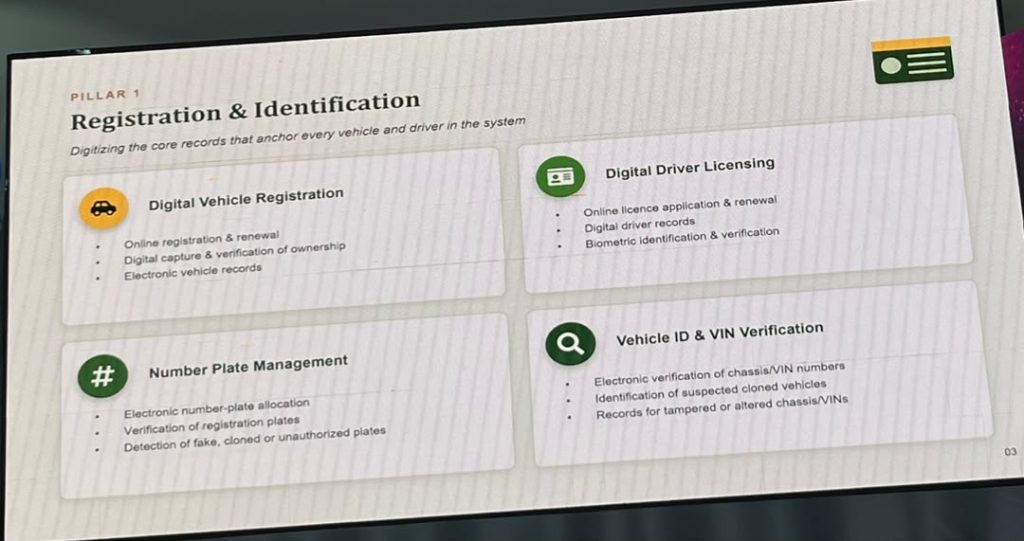
The Authority’s digital initiatives cover:
- Online vehicle registration and digital capture
- Digital driver licensing
- Vehicle identification
- Number-plate management
- Roadworthiness inspection
- Electronic roadside inspection and checks
- Digital recording of infractions
- Digital tracking of compliance
- Digital payments
- Data and analytics
Compliance and Enforcement
One of the most significant areas of transformation is compliance and enforcement.
The DVLA is using digital platforms to identify defective vehicles and ensure that inspection information is properly recorded and accessible. The Authority is also becoming stricter about the materials and standards used in vehicles.
The presentation also highlighted the legal requirement that persons must meet the prescribed age requirement, including being at least 21 years old for the relevant commercial vehicle driving categories.
Where vehicles fail to meet roadworthiness requirements, digital systems can support the electronic suspension of roadworthiness, automated SMS notifications and digital records for subsequent regularisation.
The Authority is also strengthening its approach to crash data management. While the DVLA does not independently determine the causes of road crashes, the digital management of vehicle and inspection data can provide valuable information for collaboration with the National Road Safety Authority and the Motor Traffic and Transport Department (MTTD) to improve road safety.
The DVLA also has enforcement powers to remove unauthorised vehicles from the roads where they are operating in violation of applicable requirements.
The introduction of technology into vehicle identification and number-plate management is expected to further strengthen the monitoring of vehicles on Ghana’s roads.
A Digital Ecosystem Built Around People
Across all the presentations, one message stood out: digital transformation is not simply about buying technology. It is about redesigning systems to make services faster, safer, more transparent and easier for people to access.
From data centres and cloud infrastructure to passports, fire certification and vehicle licensing, Ghana’s digital transformation is increasingly moving from isolated projects to interconnected systems.
The next stage will require stronger collaboration among government institutions, technology providers, financial institutions and citizens. Secure data-sharing frameworks, common verification standards, interoperable platforms and integrated digital services will be critical.
As Ghana continues to scale its digital ecosystem, the ultimate measure of success will not only be the number of platforms launched or systems automated. It will be how effectively these innovations solve real problems, reduce inefficiencies, improve accountability and create opportunities for citizens and businesses across the country.
National ICT Week’s theme, “Innovation at Scale: Creating Opportunities Across Ghana’s Digital Ecosystem,” therefore captures a critical national priority: moving beyond digital transformation as a concept and making technology work at scale for Ghana.
BY; Regina Bless