Kokomba Yam Traders Resist Relocation Over 24-Hour Economy Market Plans
BY; Regina Bless
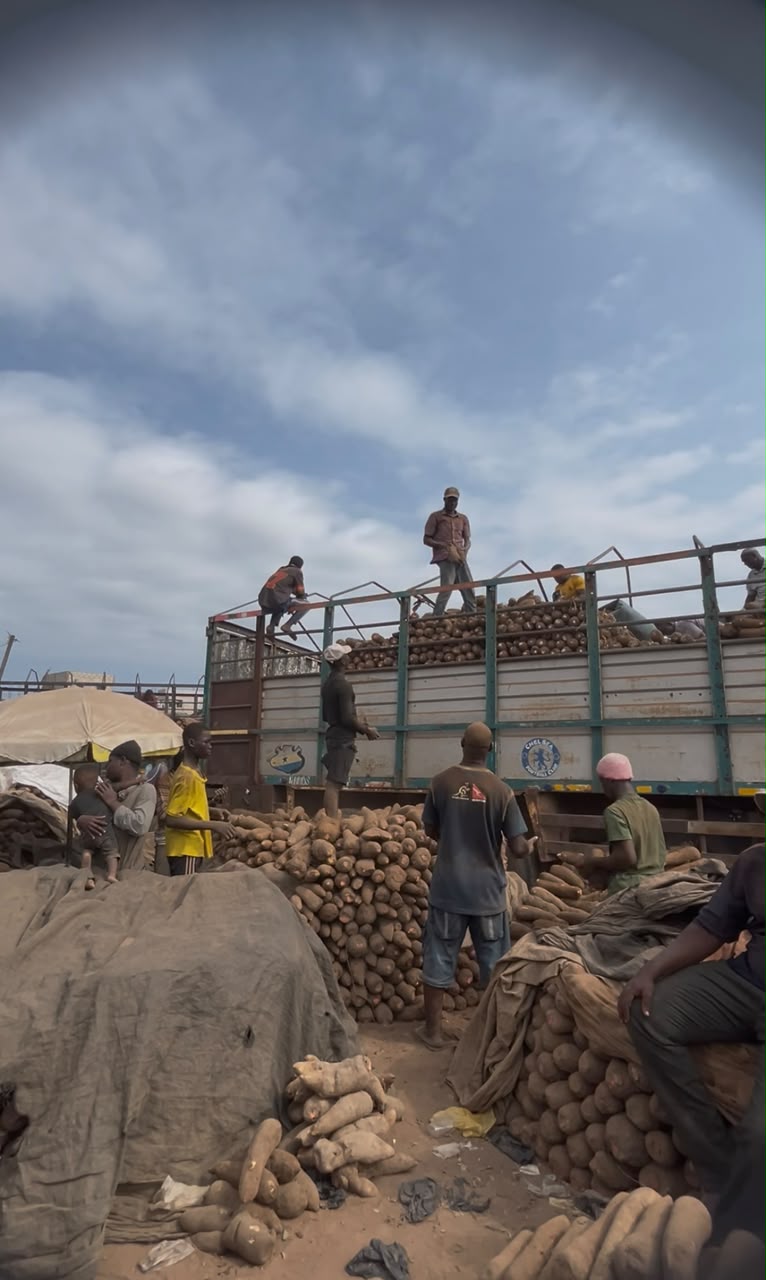
Yam traders at the Kokomba Market in Agbogbloshie have expressed strong opposition to plans to relocate them to pave the way for the establishment of a new market under the government’s 24-hour economy programme.
The traders say they are not against development, but are concerned about the manner in which the relocation is being handled and the potential impact it could have on their livelihoods.
Reporters from GhanaTalksRadio visited the market to engage the traders on the proposed relocation, with several expressing their displeasure over the decision.
One young trader said the youth at the market are particularly worried about the development because many families depend on the yam trade for their daily survival.
According to him, mothers, guardians and other family members rely on the income generated from the market to provide for their households.
“If the market is demolished, we will have nothing doing. We are not comfortable with the introduction of the 24-hour economy in the market.”
He argued that while the government’s 24-hour economy initiative may be intended to create jobs and stimulate economic activity, the implementation should not come at the expense of people who are already earning a living from the area.
Another trader expressed concern over what she described as a lack of adequate consultation before the relocation directive was issued.
She said the traders were not sufficiently informed about the proposed development and claimed that the Accra Metropolitan Assembly (AMA) did not engage them before giving them a one-month ultimatum to leave.
For the traders, adequate consultation would have allowed them to understand the government’s plans and prepare for any relocation.
They are therefore calling for meaningful engagement between the authorities and affected traders before any demolition or relocation exercise begins.
“Give Us a Place Before Asking Us to Leave”
Another trader appealed to the government to provide an alternative location before asking them to vacate the market.
He argued that traders cannot simply stop working and wait indefinitely for the proposed market to be completed.
According to him, the government should demonstrate compassion and consider the economic realities of the traders, many of whom survive on their daily sales.
He stressed that construction of a new market could take months or even years, and traders cannot afford to remain idle throughout that period.
The traders are therefore calling for a relocation arrangement that allows them to continue trading while construction takes place.
Concerns Over the Storage of Yam
A particularly important concern raised by one of the traders relates to the nature of yam itself.
The trader explained that yam is a crop that traditionally requires appropriate storage conditions and expressed concern that a highly cemented market environment could affect the quality of the produce.
According to the trader, yams come directly from the ground and can deteriorate quickly when exposed to unsuitable conditions, particularly if placed directly on cemented surfaces.
The trader therefore urged the authorities to consider the specific requirements of yam traders when designing any replacement market.
Questions Over AMA Revenue and Accountability
The traders also raised concerns about the taxes and other payments collected from them by the Accra Metropolitan Assembly.
One concerned trader questioned whether the revenue collected from traders is being used judiciously, arguing that traders contribute financially to the Assembly and should therefore be treated fairly when decisions affecting their livelihoods are taken.
The concerns have led some traders to indicate that they are unwilling to leave the market until proper arrangements are made.
Development Versus Livelihoods
The disagreement at Kokomba Market highlights a broader challenge that often accompanies major urban development projects: how to pursue modernisation while protecting the livelihoods of people already operating within affected communities.
The government’s 24-hour economy agenda is intended to expand economic activity, create employment and encourage businesses to operate beyond traditional working hours. However, for such an initiative to achieve its objectives, affected communities must also feel included in the process.
The Kokomba yam traders are therefore calling for dialogue, transparency and a clear relocation plan before any demolition takes place.
Their position is not necessarily a rejection of development, but a demand that development should not leave them without a means of survival.
As discussions over the proposed market continue, the government and the relevant authorities will have to balance the ambition of the 24-hour economy with the immediate economic needs of the traders.
For the traders at Kokomba Market, the message is simple: give them a suitable place to continue their businesses, engage them meaningfully, and ensure that the transition does not destroy their livelihoods.