Legal Vacation: Supreme Court to Rule August 21 on Oppong Nkrumah’s Bid to Halt Selected Trials
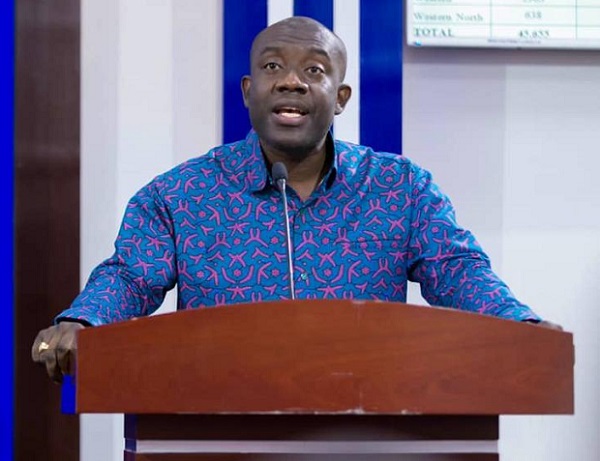
The Supreme Court will on Friday, August 21, 2026, rule on an application by Ofoase Ayirebi MP Kojo Oppong Nkrumah seeking to suspend the conduct of certain High Court trials during the legal vacation.
Justice Gabriel Pwamang, sitting as a single judge, adjourned the case after lawyers for Mr Oppong Nkrumah and the respondents concluded their arguments on Thursday, August 20.
Mr Oppong Nkrumah, represented by lawyer Frank Davies, is seeking an interlocutory injunction to suspend the operation of a warrant issued by the Chief Justice pending the determination of a substantive constitutional challenge to its validity.
The warrant permits High Court judges to continue conducting trials during the legal vacation, which runs from August 1 to September 30, 2026.
Mr Oppong Nkrumah’s lawyers contend that the warrant exceeds the Chief Justice’s administrative discretion and allows trials to continue during a period when courts traditionally focus mainly on urgent and non-contentious matters.
They argued that the Chief Justice’s exercise of discretionary power must comply with Article 296 of the Constitution.
Mr Davies told the court that allowing the trials to proceed while the constitutional case was pending could cause harm that could not adequately be remedied by monetary compensation.
He cited instances where lawyers representing accused persons were unavailable during the legal vacation but trial judges had declined adjournment requests, relying on the warrant.
According to Mr Davies, forcing accused persons to participate in trials without their lawyers could compromise their rights.
He further argued that the balance of convenience favoured suspending the trials because, if the warrant were ultimately declared unconstitutional, proceedings conducted in the meantime could undermine the effectiveness of the substantive relief being sought.
The Deputy Attorney-General, Dr Justice Srem-Sai, opposed the application, arguing that Mr Oppong Nkrumah had failed to meet the requirements for an interlocutory injunction.
He said the court had to determine whether there was a serious question to be tried, whether refusal of the injunction could result in irreparable damage, and where the balance of convenience lay.
On the substantive challenge, Dr Srem-Sai argued that the applicant had conflated the Chief Justice’s administrative authority to issue the warrant with the judicial functions of individual High Court judges.
He maintained that the warrant did not dictate how individual judges should conduct trials, when cases should be adjourned or which matters should be heard, as those remained judicial decisions for the respective judges.
Dr Srem-Sai also argued that any challenge to decisions by individual trial judges should be pursued through judicial review, including certiorari where appropriate, rather than through the Supreme Court’s original jurisdiction.
He rejected the contention that there was an established rule prohibiting trials during the legal vacation.
On irreparable harm, the Deputy Attorney-General argued that Mr Oppong Nkrumah had not demonstrated any personal injury he would suffer if the trials continued.
The State maintained that no exceptional circumstances had been established to justify the injunction and that the public interest weighed against interfering with the ongoing conduct of trials.
Justice Pwamang is expected to deliver his ruling on the interlocutory application on Friday, August 21.