When Religious Differences Become a Threat to Our Peace
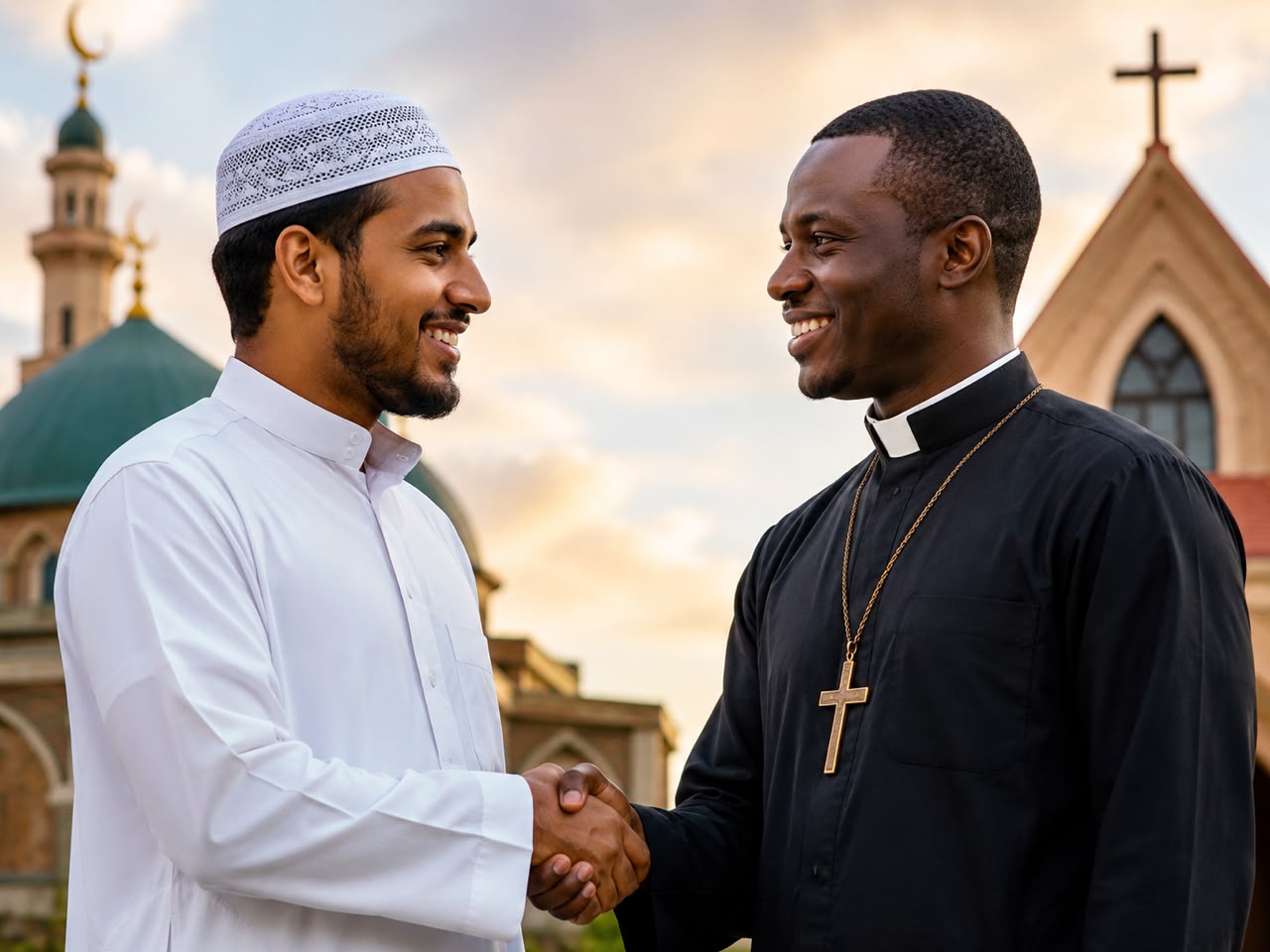
Ghana has long been recognised as a country where Christians and Muslims live, work and worship alongside one another. Families have members from both faiths, people attend each other’s celebrations, and religious leaders have historically played an important role in maintaining peace and national unity.
But recent events surrounding alleged insults against Prophet Muhammad and inflammatory responses from some religious figures have raised serious concerns about the future of Christian-Muslim relations in Ghana.
The issue goes beyond one pastor, one imam or one religious community. It raises a much bigger question: How do we protect freedom of expression while also protecting religious tolerance and the peace of our country?
Islamic cleric was arrested after allegedly making statements suggesting that those who insult Prophet Muhammad should be killed. A Christian cleric was also arrested following comments considered offensive toward Islam and the Prophet Muhammad. The developments have generated heated reactions on social media and confrontations involving religious figures.
This is worrying.
For Muslims, Prophet Muhammad is not simply a historical figure. He is deeply revered as the final prophet of Islam. Therefore, deliberately insulting him can cause profound anger and hurt among Muslims.
However, that anger cannot become an excuse for violence.
Likewise, Christians have religious figures and beliefs that are deeply sacred to them. Muslims and Christians may disagree fundamentally about Jesus Christ, Prophet Muhammad, the Bible, the Quran and other theological matters. But disagreement does not have to become hatred.
Insulting another person’s faith is not the same as debating religion
There is an important distinction between religious debate and deliberate religious provocation.
People have the right to discuss, question and disagree about religion. Christians may believe that Jesus Christ is the Son of God, while Muslims hold a different theological position. Muslims believe Prophet Muhammad was God’s final prophet, while Christians do not accept that belief.
These differences have existed for centuries.
The danger begins when people deliberately use degrading language, personal attacks or provocative statements simply to offend another religious community.
Freedom should come with responsibility.
If someone believes another religion is wrong, they should be able to explain their position without deliberately humiliating the people who follow that religion.
But violence cannot be the answer
At the same time, condemning insults against Prophet Muhammad cannot mean supporting calls to kill or physically attack those responsible.
That would take Ghana down a dangerous road.
If an individual insults Islam, the appropriate response should be through lawful channels, public condemnation, dialogue and education—not mob action, threats or violence.
The same principle must apply when someone insults Christianity or Jesus Christ.
You cannot defend a religion of peace by committing violence in its name.
Ghana’s Interior Ministry has previously urged Muslims to uphold the principles of Islam and use constructive dialogue when addressing concerns. Government officials have also repeatedly highlighted Christian-Muslim unity as an important pillar of Ghana’s peace and stability. (Ministry of the Interior)
We must not allow social media to turn Ghana into a religious battlefield
Another major concern is social media.
A controversial sermon that once might have been heard by a few hundred people can now reach hundreds of thousands within hours. Anger spreads faster than facts, and people who have never met one another can suddenly find themselves fighting over religious issues.
Social media users must therefore exercise greater responsibility.
We should stop sharing provocative videos simply because they generate engagement. Religious leaders should also understand the power of their words. A pastor speaking to thousands of Christians and an imam speaking to thousands of Muslims are not ordinary individuals speaking privately. Their words can influence the behaviour of their followers.
This is a moment for Christian and Muslim leaders to speak together
Instead of allowing extremists on either side to define the relationship between Christians and Muslims, responsible religious leaders should come together.
Pastors, imams, the National Chief Imam, the Christian Council, the Ghana Pentecostal and Charismatic Council and other religious bodies should use this moment to remind their followers that Ghana belongs to all of us.
We can disagree about religion without becoming enemies.
We can defend our faith without insulting another person’s faith.
We can condemn offensive speech without encouraging violence.
And we can demand accountability without abandoning the principles of peace.
Ghana has too much to lose.
Our religious differences should not become another source of division in a country already dealing with political, economic and social challenges.
The recent controversy should therefore be treated not merely as a dispute between a pastor and Muslims, or between Christians and Muslims, but as a wake-up call for the entire nation.
Respect must go both ways
Muslims deserve the right to practise Islam and have their sacred beliefs treated with dignity.
Christians deserve the same.
No Muslim should be attacked because of the actions or words of one cleric. Likewise, Christians should not be condemned because of the actions of one pastor.
The answer is not Christian versus Muslim.
The answer is Ghanaian versus religious intolerance.
If we truly want Ghana to remain a beacon of religious tolerance, then this is the time for restraint, dialogue, accountability and mutual respect.
Insults should not lead to violence, and religious freedom should never become a licence to provoke hatred.
Ghana must choose peace.
By; Regina Bless